
Yes. Solar is still worth it in CT for most homeowners with a sunny roof and a steady electric bill, even though the 30 percent federal tax credit ended for owned systems installed after December 31, 2025. Connecticut’s RRES program pays $0.3289 per kWh for 20 years under the Buy-All tariff for systems enrolling in 2026, and residential solar stays exempt from property tax and sales tax.
I am Adam H. Cooke, Managing Partner of Premier Improvements. I have worked in solar and roofing for 7 years, and I live in Berlin, CT. Here is the math I walk through with every homeowner, including when I say wait.
Key Facts
- The federal 25D credit ended for homeowner-owned systems installed after December 31, 2025.
- RRES Buy-All pays $0.3289 per kWh for 20 years for systems enrolling in 2026.
- Customer-owned systems add $0.032 per kWh on either RRES tariff.
- Residential solar is exempt from Connecticut property tax and sales tax.
- Smart-E loans run up to $50,000 at 6.99 to 7.99 percent APR.
- Public Act 26-127 keeps Connecticut’s solar programs running, with a successor program from July 1, 2028.
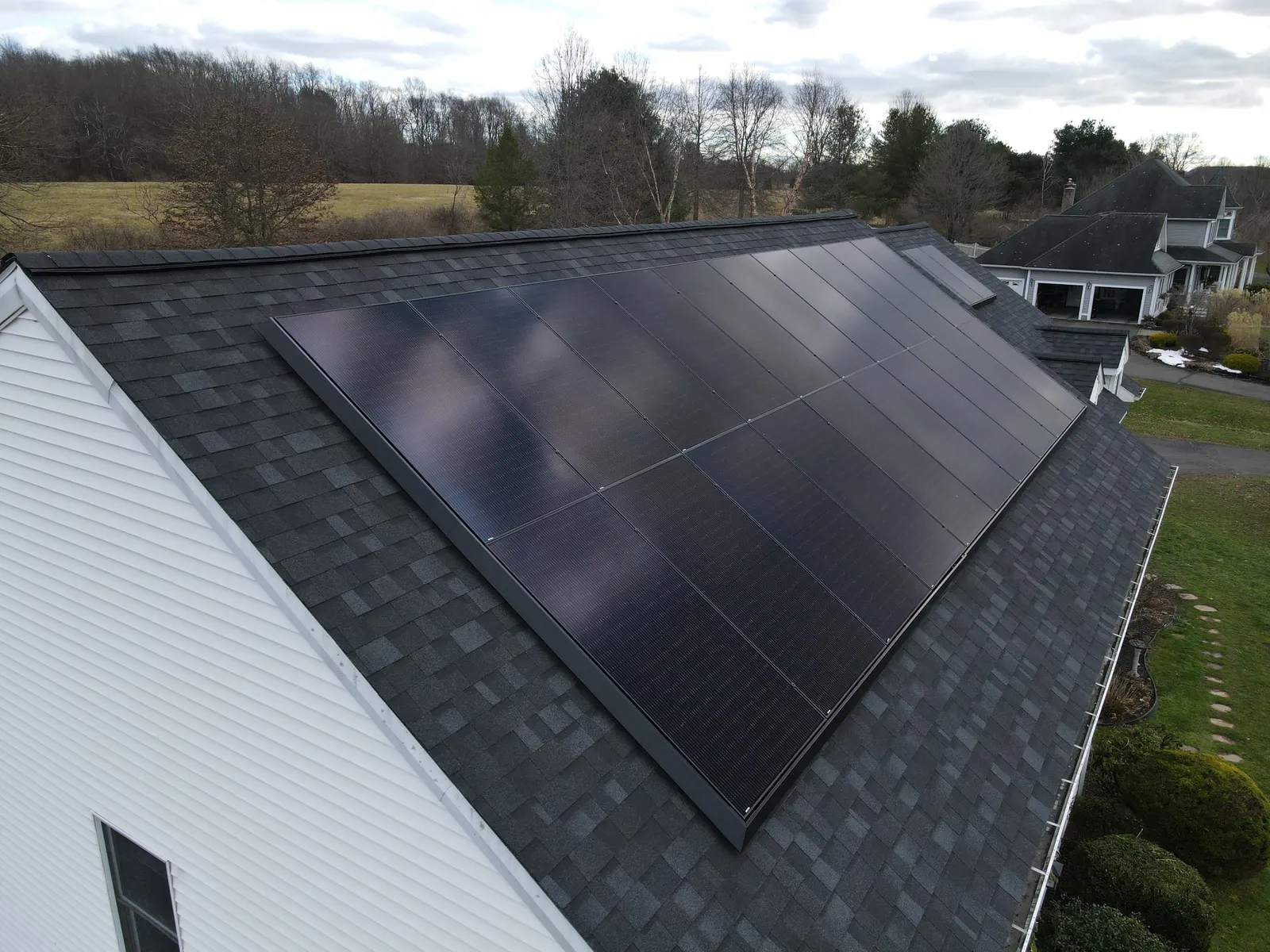
Is There Still a Federal Solar Tax Credit in 2026?
No, not for a system you own. The federal 25D residential clean energy credit ended for systems installed after December 31, 2025. The IRS counts the date installation is completed, so a deposit you paid in 2025 does not save it.
Leased and PPA systems fall under a different federal credit, and the leasing company claims it, not you.
If a salesperson still promises you the 30 percent credit on a system you own, stop the conversation. I list that red flag, plus 14 checks to run before you sign, in my solar contract checklist.
CT Solar Incentives in 2026: What the State Still Pays
The federal credit is gone. The state programs are not. These incentives stack in 2026.
| Incentive | What it pays or saves | How you claim it |
|---|---|---|
| RRES Buy-All | $0.3289 per kWh for 20 years, plus $0.032 per kWh on an owned system | Your installer files the RRES application with Eversource or UI |
| RRES Netting | Production offsets your use, with a 4.02 cents per kWh charge on all production, plus the $0.032 owned adder | Same RRES application, with Netting selected |
| Property tax exemption | Panels do not raise your assessment | Written application to your town assessor by November 1 after installation |
| Sales tax exemption | No sales tax on solar equipment or installation labor | Your installer collects Form CERT-140 |
| Smart-E loan | Up to $50,000 at 6.99 to 7.99 percent APR | Apply through a CT Green Bank approved contractor |
| Energy Storage Solutions | $30 per kWh to enroll, or $130 per kWh on grid edge circuits, plus $300 per kW each year for 10 years | Your installer applies through the program portal |
I keep the full list current on my Connecticut solar incentives guide. For battery payments and grid edge circuits, read my Energy Storage Solutions guide.
RRES Buy-All vs Netting in One Minute
RRES stands for Residential Renewable Energy Solutions. It replaced net metering in 2022 and serves Eversource and United Illuminating customers. You pick one of two 20-year tariffs, and you lock the rate in effect on the day your application is received.
- Buy-All: the utility buys every kWh your system makes at a fixed rate of $0.3289 per kWh in 2026.
- Netting: your production offsets what you use, with a 4.02 cents per kWh charge on all production.
- Adders: owned systems add $0.032 per kWh on either tariff.
Buy-All suits most owned systems. Netting suits homes that use most of their solar power during the day. I compare both line by line in Connecticut Solar Incentives 2026: RRES Netting vs Buy-All Explained.
PURA resets rates each year, so I confirm the rate on your application date before you sign.
Property Tax and Sales Tax Exemptions
Connecticut law exempts residential solar on one to four unit homes from property tax, including leased systems, when expected production does not exceed the home’s use. File a written application with your town assessor by November 1 after installation. Miss the deadline and you lose that year’s exemption.
Solar equipment, batteries bought with solar and installation labor are exempt from Connecticut sales tax. My team collects Form CERT-140 for you.
Smart-E Financing
Smart-E loans from the CT Green Bank cover owner-occupied one to four unit homes up to $50,000. APR is 6.99 percent for 5, 7 or 10 years, 7.49 percent for 12 years and 7.99 percent for 15 years. Up to 25 percent of the loan covers non-energy work, like the new roof under your panels. Premier Improvements is an approved contractor in the CT Green Bank Contractor Network.
What Does Solar Cost in Connecticut?
EnergySage reported a typical Connecticut system in October 2026 at 12.09 kW and about $2.68 per watt, or $32,379 on average. Your price depends on your roof, your usage and your equipment.
Without the federal credit, RRES payments and the tax exemptions carry the return.
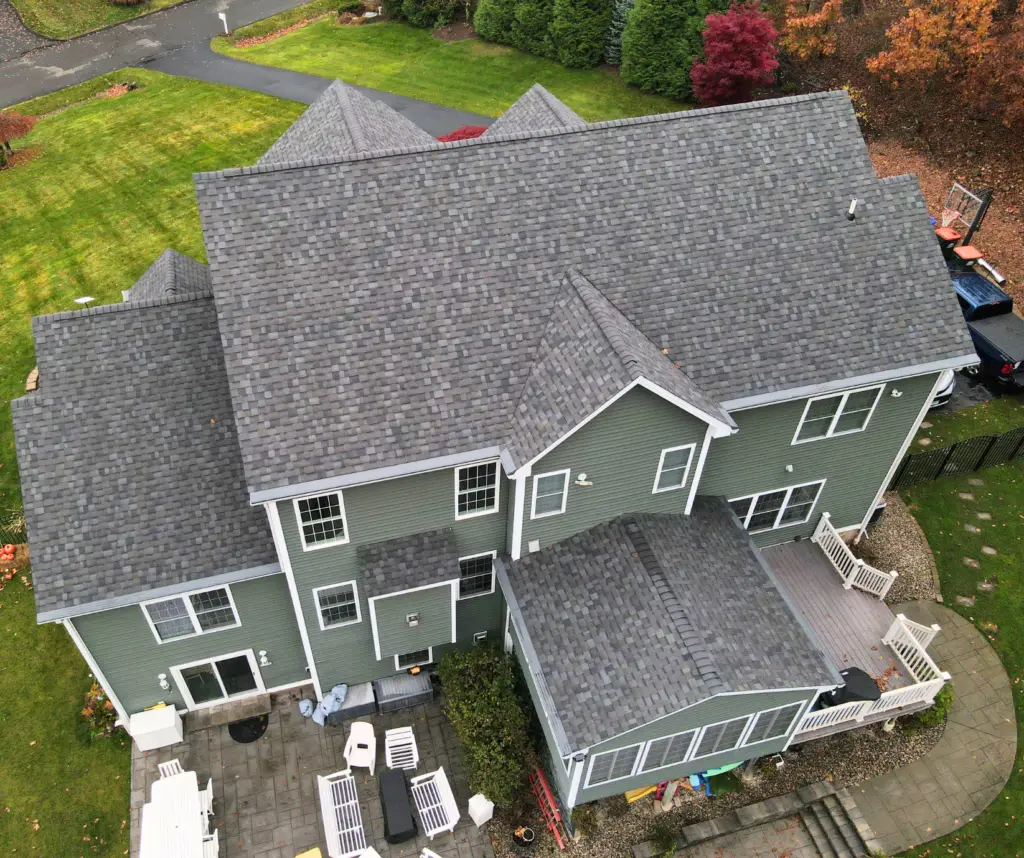
Who Solar Fits and Who It Does Not
I tell you which group you fall into before I show you a number.
Solar Fits You When
- Your roof gets steady sun with little shade from trees or nearby buildings.
- Your roof is in good shape, or you plan to replace it with the solar as one project.
- You pay Eversource or UI a real electric bill every month.
- You plan to stay for years, or you want an owned upgrade that transfers with the house.
Solar Does Not Fit You Yet When
- Heavy shade covers the roof most of the day. A ground mount solves this on some properties with open yard space.
- Your asphalt roof is more than 10 years old and you do not want to replace it. Pulling panels off later to reroof costs thousands and pauses your savings.
- Your electric use is low. The property tax exemption applies only when expected production does not exceed the home’s use, so a small bill means a small system and a thin return.
- You plan to move soon and want a lease. A buyer has to qualify for and take over the contract, which adds steps to closing. Read my guide to selling a home with solar first.
Owning vs Leasing Solar in Connecticut
Ownership wins for most homes I see. The table shows why.
| Question | Owned (cash or Smart-E loan) | Lease or PPA |
|---|---|---|
| Who owns the panels | You | The finance company |
| Federal credit in 2026 | 25D ended for systems installed after December 31, 2025 | A separate federal credit, claimed by the leasing company |
| RRES customer-owned adder | $0.032 per kWh on either tariff | Not yours, since you do not own the system |
| Property tax exemption | Yes | Yes, leased systems qualify |
| Yearly price increase | None on a cash purchase or fixed loan | The escalator printed in the contract |
| When you sell | Transfers with the house | Buyer applies to take over, or you buy it out |
If you choose a lease, get the yearly escalator and the year 25 rate in writing.
Are Solar Panels Free in Connecticut?
No. Connecticut has no program that installs free solar panels. Ads that promise free solar describe a lease or PPA. If the rep calls the escalator small and will not print it, end the sale.
How I Run the Numbers on Your Real Bills
- I start with 12 months of your Eversource or UI bills. Your real usage sets the system size.
- I design the array in Aurora Solar on your actual roof and produce a yearly production estimate.
- I check the roof. If the shingles are more than 10 years old, I price roof and solar as one project.
- I model Buy-All and Netting on your usage, with every adder you qualify for.
- I show cash, Smart-E loan and lease prices side by side, with any escalator in writing.
- You get a written proposal with your exact equipment. No sign-today price and no pressure.
Every number I show you is an estimate, not a guarantee. I confirm current rates before you sign.
What Changes in 2028
Public Act 26-127, signed in July 2026, sets successor tariffs to start July 1, 2028. Under the legislative bill analysis, Buy-All then goes only to low-income customers and affordable multifamily housing. Systems enrolled now keep their 20-year rate.
Frequently Asked Questions
Is solar worth it in CT without the federal tax credit?
Yes, for most owned systems on a sunny roof. RRES Buy-All pays $0.3289 per kWh for 20 years in 2026, and owned systems add $0.032 per kWh.
Is there still a federal solar tax credit in 2026?
Not for systems you own. The federal 25D credit ended for systems installed after December 31, 2025. Leases and PPAs follow a separate federal credit claimed by the leasing company.
Are solar panels free in Connecticut?
No. Free solar offers are leases or PPAs. A finance company owns the panels and you pay for the power.
Should I replace my roof before going solar?
Yes, when your asphalt roof is more than 10 years old. A Smart-E loan lets up to 25 percent of the loan cover non-energy work like the roof.
Want the real math on your own house? Send me 12 months of electric bills and I will run Buy-All, Netting, cash, loan and lease side by side. Book a free 30-minute call, reach me through my contact page, or read more answers on my solar FAQ. If solar does not pay on your roof, I will tell you.